A Comprehensive Clinical Guide to Dioscorea Villosa (Wild Yam)
Discover the complete homeopathic profile of Dioscorea Villosa (Wild Yam). Learn how this botanical remedy offers profound relief for agonizing flatulent colic, nerve pain, and right-sided sciatica.
Don't self-treat a serious condition
Conditions like this deserve a doctor's eye. Start an online consultation and get a treatment plan suited to you.
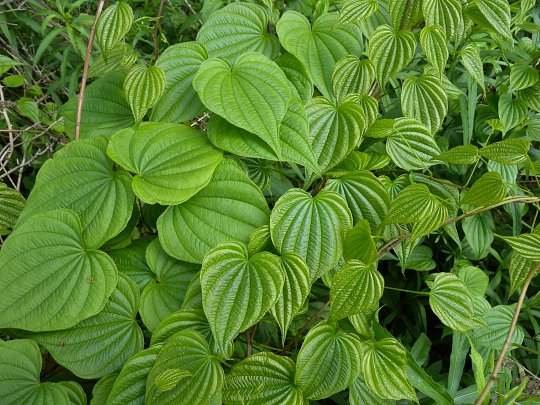
Start ConsultationDioscorea villosa, commonly known as the wild yam, is a twining tuberous vine native to and found growing wild across North America. In both botanical medicine and classical homeopathy, it occupies a profound and highly specific therapeutic space.
Botanical and Nutritional Profile The foundational fame of the wild yam rests on its high concentration of steroid-like saponins. Chemically, these unique plant compounds can be converted into human hormones, notably progesterone contraceptives and cortisone.
🌟 The specific steroid-like saponin isolated from wild yam is known as "diosgenin." Discovered in the mid-20th century, this exact compound served as the crucial chemical precursor necessary for the mass production of the very first oral contraceptive pills.
Nutritionally, yam tubers are a powerhouse. They are rich in vitamin C, dietary fiber, vitamin B6, potassium, and manganese, while remaining remarkably low in saturated fat and sodium. This specific nutritional matrix promotes robust general health. A diet high in potassium and low in sodium naturally creates an optimal electrolyte balance within the human body, offering vital protection against osteoporosis and cardiovascular disease. Furthermore, yams boast a lower glycemic index compared to standard potato products. This allows them to provide a sustained, slow-release form of energy, acting as a dietary safeguard against obesity and diabetes.
The "Land of Twins" Phenomenon The profound hormonal influence of the yam is famously observed in the village of Igbo-Ora, Nigeria, frequently dubbed "The Land of Twins." There is scarcely a family in this community without a set of twins. Fertility experts and researchers have hypothesized that the community’s unusually high multiple-birth rate may be directly linked to their heavy daily consumption of agida (the local name for yam tubers).
Yams contain natural phytoestrogens—plant-based hormones that may stimulate the human ovaries to simultaneously release an egg from each side. While scientists caution that this observation is a correlation rather than proven causation (and that other dietary or genetic elements may contribute), the theory remains compelling. If true, women hoping to conceive twins might consider adopting a yam-heavy diet rather than relying solely on fertility drugs like Clomid!
Homeopathic Profile: The Mind and Constitution
🌟 Dioscorea villosa was officially introduced into the homeopathic materia medica through extensive physiological provings conducted by Dr. A.M. Cushing in the 19th century, which clearly mapped its profound affinity for the human gastrointestinal tract and nervous system.
In homeopathic practice, Dioscorea is primarily suited for individuals suffering from feeble digestive powers. It is particularly indicated for heavy tea-drinkers who suffer from severe flatulence.
Mentally, the patient requiring this remedy is often irritable and depressed in spirits. They may exhibit a peculiar type of cognitive confusion, characterized by frequently calling things by the wrong name.
Head, Face, and Senses The head feels dull, confused, and dizzy, often accompanied by a mouth that is paradoxically dry yet bitter. Dull head pains are noticeably worse after eating dinner. The patient may experience sharp pains directly over the eyes, or a severe squeezing pain in the head and temples that feels as though the skull is caught in a vise.
Eyes and Ears: The eyes feel weak, sore, and smarting, with lids that gum together. A highly peculiar symptom is the distinct physical sensation of a round substance or sharp sticks lodged in the eyes. Ear pains (which can be sharp, or manifest as a dull squeeze before and behind the ears extending to the jaw angles) are worsened by blowing the nose.
Nose and Mouth: The nose may be dry and stopped up, or have a watery discharge, accompanied by a bad, bilious smell. The tongue is coated white or yellow-white, with a brown, sore tip that feels worse in the morning. The patient may accidentally bite their tongue or experience spasmodic jaw closures. Taste is altered: bitter, nasty, rough, flat, or pappy. The mouth feels completely dry yet is full of sticky mucus, and notably, the patient experiences no thirst.
Throat: The throat and fauces feel dry, burning, smarting, and sore, with a hacking cough triggered by a distinct tickling low down in the throat.
The Digestive Core: Wind, Colic, and Cramps The defining genius of Dioscorea lies in the digestive tract. It is the premier remedy for excessive, agonizing flatulent colic brought on by errors in diet, excess eating, or heavy tea consumption.
Patients suffer from frequent sharp pains and severe abdominal distress that forces them to urgently unfasten their clothing. They experience massive belching of wind—which may be tasteless, sour, bitter, or smell like rotten eggs—but this expulsion provides only partial relief.
🌟 The overarching physiological action of Dioscorea targets the solar plexus and the spinal nerves. This nervous system disruption is what triggers the intensely painful, radiating nerve spasms and reflex pains found throughout the viscera.
Symptoms include sharp, cramping pains in the pit of the stomach, severe hiccoughs, and violent discharges of intestinal flatus. The remedy covers gastrodynia (stomach pain), cutting pains in the gall-bladder region (gall stone colic), and sharp liver pains that uniquely radiate straight to the nipple. The patient feels a distinct faintness at the epigastrium.
The bowel pains are steady, twisting, and constantly changing location. They are worse in the lower abdomen and worse when lying down. There is a constant dull ache mixed with sharp, cutting pains throughout the intestines, accompanied by loud rumbling and the passing of large quantities of hot flatus.
🌟 The absolute most critical identifying feature of Dioscorea—which perfectly distinguishes it from its sister remedy, Colocynthis—is its primary modality of relief. The Dioscorea patient is forced to stretch out completely flat or bend backward to relieve their agonizing abdominal cramps, whereas the Colocynthis patient is compelled to bend forward and double over.
The pain often begins in one small, localized spot and radiates violently upward and downward. It may jump to distant parts of the body, moving from the abdomen to the stomach, liver, spleen, or uterus.
Stool and Evacuation Mornings are particularly difficult. The patient feels a sudden urging to stool. The expulsion of flatus is difficult, violent, and hot. Morning stools are often profuse, thin, watery, yellow, offensive, and bilious, but fail to relieve the bowel pains and leave the patient feeling faint. The morning stool is frequently followed by the painful protrusion of hemorrhoids.
Male Reproductive System There is a duality in the sexual sphere: either constant genital excitement with frequent erections, or a heavily diminished sexual desire. The patient may suffer from seminal emissions during sleep without erections. The genitals often feel cold and relaxed, leading to profound physical weakness (especially weak knees) and mental depression. Sharp pains in the inguinal region extend down into the testicles, and there is a strong-smelling sweat on the scrotum and pubes.
Chest, Back, and Extremities
Chest: Tightness across the upper chest with a distressed feeling. Pains uniquely shoot completely through the lungs to the back, and vice versa. Sharp chest pains can temporarily arrest breathing and motion, causing faintness.
Back: The neck and back feel lame and stiff. The lumbar region suffers from weakness and dull pain, which is worsened by bending the spine, alongside sharp pains that radiate to the testicles.
Extremities: The remedy has a specific affinity for right-sided sciatica. Pain originating from the exit point of the sciatic nerve is felt only when moving the limb or when sitting up. Sharp, darting pains move from place to place. The limbs and joints feel weak and painful, especially at the knees.
Skin and Nails: The nails seem unusually brittle. The remedy is highly effective for early-stage panaritium (whitlow/nail infection) when the pains are sharp, agonizing, and picking. There is widespread itching and burning on various parts of the body.
🌟 In everyday clinical practice, homeopaths frequently utilize Dioscorea in lower potencies—such as 3X, 6X, or 6C—to rapidly manage acute, painful attacks of flatulent colic, reserving higher potencies for chronic nerve or sciatic pains.
Generalities, Fever, and Modalities Initially, the remedy acts to strengthen the nerves, but its deeper pathology reveals trembling, languor, faintness, numbness, and tingling.
Fever presentations lack actual heat; instead, the patient experiences profound chilliness with a bitter mouth, aching bones, backache, lung pain, and a sore throat. They have cold extremities and a feeble pulse, sweating easily while feeling chilled to the bone.
Modalities (What makes it better or worse): Pains characteristically spread upward and downward. Almost all pains (with the exception of the headache) are noticeably relieved by motion and better in the open air. The colic is better from stretching out, rising, and walking, and worse from lying down.
Comparisons: Camphor seems to increase the effects of Dioscorea. It is most frequently compared to Colocynthis, but in Colocynthis, the colic is less continuous, is relieved by hard pressure, and the patient must bend double for relief.
Don't self-treat a serious condition
Conditions like this deserve a doctor's eye. Start an online consultation and get a treatment plan suited to you.
Start Consultation