Aloe Socotrina: A Comprehensive Clinical Profile
Discover the complete homeopathic profile of Aloe Socotrina. Learn about its profound healing effects on liver sluggishness, early morning diarrhea, and painful hemorrhoids.
Don't self-treat a serious condition
Conditions like this deserve a doctor's eye. Start an online consultation and get a treatment plan suited to you.
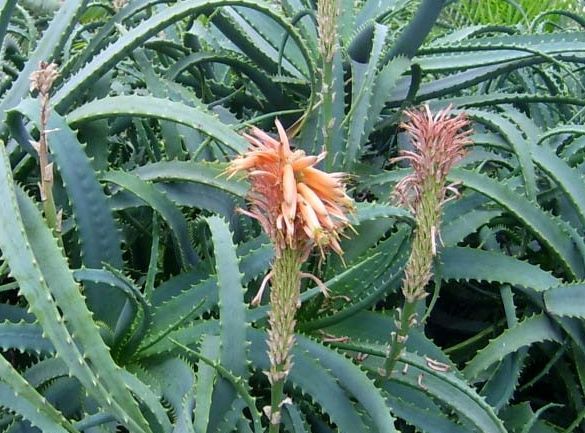
Start ConsultationAloe Socotrina acts most prominently on the liver, serving as a primary remedy for individuals suffering from deep-seated gastrointestinal and hepatic disturbances. Originating from the inspissated juice of the Socotrine Aloe plant, this remedy was historically proved and introduced into the homeopathic materia medica by Dr. Constantine Hering in 1841. It is constitutionally best suited to individuals of a phlegmatic, sluggish, or indolent temperament—particularly the elderly, those exhausted by chronic illness, or those who lead overly sedentary lives that contribute to internal stagnation.
This remedy has also many symptoms of portal and uterine congestion. Portal stasis is the physiological root of nearly all Aloe symptoms. When the liver becomes sluggish, blood pools in the lower abdomen and pelvic region. This creates a profound sensation of heat, heaviness, and engorgement throughout the entire pelvic bowl. In women, this uterine congestion often manifests as a heavy, dragging, downward sensation, accompanied by premature, profuse menstruation and a persistent feeling of localized pelvic heat.
A notable physical sign is a varicose condition of veins in the pharynx. The mucous membranes of the throat reflect the general venous congestion found throughout the entire body. The patient may complain of a dry, scraped, and hot sensation in the throat, frequently accompanied by the hawking of thick, sticky mucus, especially in the mornings upon waking.
The patient often reports a distinct sensation of a plug wedged firmly between the symphysis pubis and the os coccygis, with urging to stool. This phantom sensation of a localized mass is due to the severe swelling and engorgement of the internal rectal tissues. It creates a constant, irritating downward pressure that mimics the need for a bowel movement, even when the lower bowels are completely empty.
There is a profound sense of insecurity in the rectum, especially when passing flatus. A lot of mucus, with pain in the rectum after stool, is a constant feature. This mucus can be incredibly copious, sometimes passing completely on its own without any fecal matter. The lingering pain after passing stool is characterized by a burning, scraping soreness that makes sitting highly uncomfortable.
Headache
The Aloe patient frequently experiences a dull headache across the forehead or a pronounced weight on the vertex. This sensation on the vertex is often described as feeling like a heavy stone or block of wood pressing downward on the skull. It is fundamentally a "gastric headache" or "bilious headache," directly linked to the sluggishness of the liver and the engorgement of the abdominal organs.
There is an accompanying heaviness in the eyes and nausea. The head aches above the forehead, with heaviness in the eyes, so much so that the patient must partially close them. The eyelids feel incredibly heavy, almost as if paralyzed, and the patient may exhibit a sluggish, apathetic expression. This frontal headache is typically aggravated by heat, stepping heavily, or eating, and is notably ameliorated by applying cold water to the head or face, or by resting quietly in a cool, dark room.
Diarrhoea
The bowel symptoms of Aloe are its most famous and defining characteristics. There is a sudden urging to stool in the early morning. This sudden, compelling urge typically drives the patient out of bed abruptly between 5:00 AM and 6:00 AM. Unlike the morning diarrhea of Sulphur, which is also urgent, the Aloe diarrhea is preceded by intense, loud rumbling and gurgling in the abdomen, feeling as if the entire intestine is filled with shifting, sloshing fluids.
This morning rush is accompanied by a great deal of flatus and great weakness of the sphincters; the patient loses confidence in them and fears that stool will pass with the flatus. This "loss of confidence" is a defining psychological and physical keynote. The rectum feels entirely lacking in muscular tone. The patient lives in a state of constant anxiety, terrified to pass wind or even move too quickly, unsure if just gas or liquid stool will escape. This forces them to remain close to a restroom at all times, severely impacting their daily functioning.
There is a sense of great exhaustion after stool. This exhaustion is entirely disproportionate to the actual volume of the bowel movement. The patient feels completely depleted of their vital force, often breaking out in a cold sweat, feeling faint, and needing to lie down immediately to recover their strength.
Haemorrhoids (Piles)
The hemorrhoids of Aloe are highly characteristic; they protrude like a bunch of grapes after each stool. They appear swollen, dark blue or purple, and are severely engorged with blood. They are exquisitely tender to the touch, often feeling incredibly hot, burning, and pulsating with a heavy, throbbing ache that radiates up into the lower back and pelvis.
These painful piles are dramatically relieved by the application of cold water and aggravated by motion. The relief from cold bathing is a major golden keynote for Aloe. Despite the patient sometimes feeling generally chilly, local cold applications act as an immediate astringent, soothing the intense burning pain. Conversely, even the slightest physical motion, such as walking or stepping, exacerbates the throbbing, forcing the patient to remain perfectly still, often lying on their abdomen.
A fascinating systemic feature of this remedy is lumbago alternating with headache and piles. This alternating, seesaw pattern of pathology is deeply characteristic of Aloe's constitutional action. When the hemorrhoidal veins are actively bleeding or fully prolapsed, the patient's severe lower back pain (lumbago) and chronic frontal headaches will temporarily vanish. However, if the bleeding stops or the piles are suppressed, the headache and backache will immediately return with intense severity.
To differentiate clinically: Collinsonia generally has constipation and Aloes diarrhoea. While both remedies present with profound pelvic congestion and severe hemorrhoids, the Collinsonia patient suffers from obstinate, difficult constipation, often accompanied by a sensation of sharp sticks or gravel in the rectum. The Aloe patient, by contrast, suffers from a complete relaxation of the rectal muscle fibers, chronic looseness of the bowels, and a total inability to retain fecal matter.
Dysentery
In cases of dysentery, the stools are of a jelly-like mucus and covered with blood. The physical appearance of this mucus is visually distinct; it often presents in large, transparent, gelatinous masses or lumps that are frequently described by practitioners as resembling "frog spawn" or crushed jelly. The blood may be mixed within the mucus or streak its outer surface.
This is accompanied by intense griping in the epigastric region. This griping, cramping pain is agonizing. It typically begins just above the navel and radiates downward, causing the patient to double over in distress before a bowel movement. The pain often peaks just before the evacuation and leaves a lingering, scraped, and sore sensation throughout the entire intestinal tract long after the stool has passed.
Mentally, the chronic suffering from these pelvic and hepatic symptoms takes a severe toll on the Aloe patient. They are frequently dissatisfied, highly irritable, and deeply anxious about their bodily functions. The constant abdominal distress makes them gloomy, pessimistic, and averse to any form of mental or physical labor. They are especially cross when the weather turns cloudy, hot, or damp. Symptomatically, their complaints are decidedly worse in the heat of summer, or after eating and drinking—especially after consuming vinegar, oysters, or beer. Conversely, they find significant amelioration from cool, open air, cold weather, and the direct application of cold water.
Don't self-treat a serious condition
Conditions like this deserve a doctor's eye. Start an online consultation and get a treatment plan suited to you.
Start Consultation