Cactus Grandiflorus in Homeopathy: The Ultimate Remedy for Cardiac Distress & Constriction
Explore the profound healing properties of Cactus Grandiflorus in homeopathy. Learn how this unique night-blooming remedy addresses severe cardiac distress, angina, and its signature "iron band" feeling of constriction.
Don't self-treat a serious condition
Conditions like this deserve a doctor's eye. Start an online consultation and get a treatment plan suited to you.
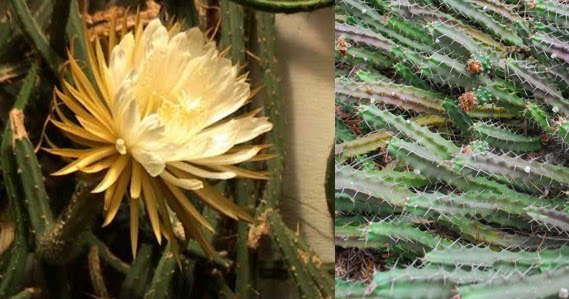
Start ConsultationCactus grandiflorus is a profound and powerful remedy within our materia medica, primarily recognized for its dramatic and specific action on the cardiovascular system and the circular muscle fibers of the body. Prepared from the fresh stems and blooming flowers of the Night-Blooming Cereus—a rare cactus native to the Americas that opens its vibrant, vanilla-scented petals for only a single night each year—this remedy is most potent when the mother tincture is carefully extracted during its brief summer bloom.
When a patient requires Cactus, their vital force is typically deeply compromised. They present in a severely distressed state: they may appear pulseless, panting for breath, and utterly prostrated by their suffering.
The Mental and Emotional Landscape The physical suffering of the Cactus patient is mirrored by intense emotional turmoil. There is a palpable and overwhelming fear of death, often accompanied by sudden screams of pain during acute attacks. The patient exhibits profound anxiety, deep sadness, taciturnity (a reluctance to speak), and hypochondriasis. There is an irresistible inclination to weep. In clinical practice, we observe that this profound melancholy and fear is rarely a primary psychological condition; rather, it is a direct secondary reflex to the severe mechanical distress and oxygen starvation occurring within the physical heart, causing the nervous system to signal impending doom.
The Grand Characteristic: The Sensation of Constriction The central, unmistakable guiding thread of Cactus grandiflorus is the sensation of intense, unbearable constriction. This feeling can manifest anywhere but is most prominent in the heart, chest, and neck; the patient may feel as though their entire body is tight or wrapped securely in cloth.
The most famous symptom is a severe difficulty of breathing accompanied by continued oppression and uneasiness, feeling exactly as if the chest were constricted with an iron band. Furthermore, there is a sensation of great constriction in the middle of the sternum, as if the parts were compressed by iron pinchers. This brings heavy oppression of breathing that is noticeably worse upon any motion.
Pathologically, this "iron band" sensation is derived from the remedy's profound action on the vasomotor nerves and the circular muscle fibers throughout the body, causing them to spasm and contract abnormally.
Cardiovascular and Circulatory Dominance The heart is the primary battleground for this remedy. The patient feels a sensation of constriction in the heart, as if an iron band prevented its normal, rhythmic movement. There are very acute pains and stitches in the heart. The patient endures palpitations day and night, which are characteristically worse when walking and worse at night, particularly when lying on the left side.
There are radiating pains located in the apex of the heart that shoot down the left arm to the very ends of the fingers, accompanied by a feeble pulse and dyspnea (shortness of breath). This specific symptom picture makes Cactus one of our absolute leading remedies for angina pectoris and acute coronary insufficiency, especially when triggered by over-exertion or toxic exposures like heavy tobacco use.
Physical examination often reveals endocardial murmurs, an excessive cardiac impulse, increased precordial dullness, and an enlarged ventricle. The heart's action exhibits notable irregularity; at times it beats very frequently, while at others it is dangerously slow. There is a general state of irregular circulation marked by violent congestion and hot gushings into the chest. Additionally, one may observe strong, localized pulsations in odd places throughout the body, such as directly behind the stomach.
Head, Face, and Nervous System Cactus presents with intense pulsating pain, notably affecting the right side of the head. There is a heavy pressing in the head, feeling as if a great weight lay on the vertex (the top of the head). This headache is better from applied pressure, but worse from noise and light. A peculiar and defining symptom is the onset of a headache if the patient is obliged to pass their normal dinner hour.
The face is characteristically red and congested. We also see chronic prosopalgia (facial neuralgia) localized on the right side, which is aggravated by the slightest motion. Periodical neuralgias are common, with pains so severe they extort cries from the patient.
Respiratory and Thoracic Symptoms The respiratory struggles are heavily linked to the cardiac weakness. The patient simply cannot lie in a horizontal position due to intense congestion to the chest, which prevents lying down without bringing on palpitations and constriction. Going upstairs causes severe oppression of breathing. There is a spasmodic cough yielding copious mucous expectoration, and a catarrhal cough featuring much viscid (thick and sticky) expectoration. The chest presents with much rattling of mucus. These symptoms collectively describe classic congestive heart failure, where fluid backs up into the lungs due to the inefficiency of the left ventricle, demonstrating the remedy's deep systemic reach.
Gastrointestinal Tract and Hemorrhage Digestively, the patient experiences an acrid sour fluid rising into the throat and mouth, which makes all food taste acid. There is burning and a distinct pulsating sensation in the stomach.
Cactus has a marked tendency toward hemorrhage, featuring profuse nosebleeds and copious vomiting of blood. Interestingly, despite the tendency to bleed, the remedy favors the formation of clots speedily. The sudden hemorrhages of Cactus are typically the mechanical result of the intense vascular congestion and high blood pressure spikes, acting as a physiological "release valve" for the overwrought circulatory system.
Female Reproductive System In women, Cactus is indicated for very painful menstruation and vaginismus. There is a characteristic pulsating pain in the uterus and ovaries. The menses arrive too early and the flow is dark and pitch-like. A striking modality is that the menses cease entirely upon lying down, which happens concurrently with the onset of heart symptoms.
Extremities, Fever, and Sleep Like many severe heart cases, Cactus features marked weakness and coldness of the extremities. There is a chilling coldness in the back, and the hands become icy-cold. The left arm feels numb, and the fingers tingle. The patient may experience a chill that is not made better by covering.
In the lower extremities, we see severe edema (swelling) of the feet that extends up to the knees; the skin appears shining, and pressure with the fingers leaves an indentation.
Fever presents with strict periodicity, occurring every day at the exact same hour, for many successive days. The patient also suffers from sleeplessness without any discernible cause.
When the action of Cactus needs to be modified or counteracted, Aconite is one of its primary antidotes.
Don't self-treat a serious condition
Conditions like this deserve a doctor's eye. Start an online consultation and get a treatment plan suited to you.
Start Consultation