The Salty Truth: Balancing Salt, Diet, and Your Vital Force
Discover the vital role salt plays in your body, the hidden dangers of modern sodium overload, and how to find true nutritional balance for you and your family.
Don't self-treat a serious condition
Conditions like this deserve a doctor's eye. Start an online consultation and get a treatment plan suited to you.
Start ConsultationSalt is a commonly occurring mineral that has shaped human history, preserving our food and serving as a cornerstone of the human diet. In its purest form, the body needs a certain amount of it to function properly and maintain a healthy internal environment. However, in our modern world, the balance has tipped. Everyday staples like bread have become major sources of salt in our diets, and consuming high levels of this mineral can be incredibly dangerous for both children and adults.
Understanding the delicate balance of salt intake is not just about avoiding disease; it is about supporting the body's natural, vital force. Let us explore how salt affects our system, why moderation is key, and how we can achieve true nutritional harmony.
The Spark of Life: Why Do We Need Salt?
Salt is a naturally occurring mineral, the technical and chemical name of which is sodium chloride. When we consume salt, it is the sodium portion that is most critically important to human physiology. The human body requires a specific, measured amount of sodium to function properly and sustain life.
Sodium's primary role is to act as a regulator. It helps to maintain the concentration of bodily fluids at the correct and optimal levels, ensuring our tissues remain properly hydrated without becoming waterlogged. Furthermore, sodium plays a central, indispensable role in the transmission of electrical impulses in our nerves. Every time you move a muscle, take a breath, or formulate a thought, sodium is helping to carry that electrical signal through your nervous system. Finally, it helps the individual cells of your body to take up essential nutrients from the bloodstream.
In the practice of homoeopathy, salt is highly valued and is potentized into a profound remedy known as Natrum Muriaticum. While crude, dietary salt can cause severe fluid retention and tissue swelling, the ultra-diluted homeopathic preparation of Natrum Muriaticum is often used to treat conditions of water imbalance—such as excessive cellular dryness, watery eyes, or oedema—beautifully demonstrating the fundamental homeopathic principle of "like cures like."
The Burden of Excess: Why is Too Much Salt Bad?
While sodium is essential, an excess of it disrupts the body’s innate equilibrium. In adults, when the levels of sodium circulating in the blood are too high, the body attempts to dilute this excess salt by retaining too much water. As a direct result, the overall volume of bodily fluids increases significantly.
Many scientists and medical researchers believe this process of fluid expansion is directly linked to high blood pressure, medically known as hypertension. Hypertension is a silent condition that is, in turn, linked to a vastly greater risk of experiencing coronary heart disease and stroke.
When you have high levels of fluid circulating at a high pressure through the brain, there is a much greater chance that any microscopic weaknesses in the brain's blood vessels will be exposed. Under this immense pressure, these vessels may burst, causing a debilitating or even fatal stroke. Similarly, a greater volume of heavy fluid passing through the cardiovascular system can place severe additional strain on the heart muscle itself, thereby increasing the possibility of coronary disease over time.
It is worth noting, however, that the human body is incredibly complex. There are many potential causes of hypertension and coronary heart disease—including stress, lifestyle, and genetics. Because of this complexity, some scientists actively deny that salt plays any significant role at all, pointing to other dietary culprits instead.
The early human body evolved over millennia on a natural diet that contained less than 1 gram of salt per day. Our modern intake is a drastic evolutionary mismatch, which is why our biological systems, originally designed to fiercely conserve scarce salt, now struggle profoundly under the heavy burden of modern dietary excess.
A Critical Warning for Infants
An average, healthy adult possesses fully matured kidneys that are generally able to filter out and remove excess dietary salt from the body, excreting it safely into the urine.
However, very young babies are in a highly vulnerable state of development. They simply do not have the physiological capacity to process large quantities of salt because their tiny kidneys are not yet fully developed.
If infants are given adult food containing a higher salt content before they are at least four months old, they cannot excrete the mineral. As a result, excess sodium can rapidly accumulate in their small bodies. This toxic accumulation can cause devastating kidney, liver, and brain damage. In very occasional, tragic cases, it can even result in death.
Therefore, it is strictly recommended that babies are given only milk—whether that is natural breast milk or specifically formulated baby formula—for the first four months of life. Baby foods are strictly regulated and supposed to contain much lower levels of salt. It is highly recommended that if adult foods are eventually to be given to infants, only completely unprocessed foods should be used, and absolutely no salt should be added during preparation.
Finding the Balance: How Much Salt Should We Eat?
To maintain optimal health and support the vital force, adults should eat no more than six grams of salt a day—roughly the equivalent of one single teaspoon.
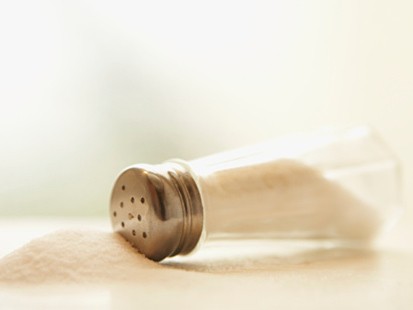
You might wonder how we consume so much if we do not use a saltshaker. The truth is that the main sources of salt in the modern diet are processed foods, as well as the salt added during cooking or directly at the dinner table. Even everyday staples like meat, meat products, and standard loaves of bread can be surprisingly high in hidden salt.
Salt is aggressively added to processed foods by manufacturers for two primary reasons: to aid in artificial preservation (extending shelf life) and to forcefully improve the taste of otherwise bland, highly refined ingredients. Furthermore, sodium is heavily present in common food additives, such as monosodium glutamate (MSG) used in many restaurant meals, and sodium bicarbonate (baking soda) used in baked goods.
It is important to remember that we do not need to add manufactured salt to our diets to survive. Small, perfectly balanced amounts of sodium can be found naturally occurring in some whole foods, such as eggs and fish.
Current dietary studies reveal that roughly 70% to 80% of the sodium consumed in modern, industrialized diets does not come from the saltshaker in your kitchen, but is rather covertly hidden in ultra-processed restaurant meals, packaged baked goods, and canned soups.
The Path to Wellness: What Should We Do?
Because excess salt has been repeatedly linked to increased blood pressure, everybody should look to actively reduce the amount of salt in their daily diet.
Making this dietary shift would have a massive, life-saving, and significant effect on those specific people who need to reduce their salt levels because they are genetically or physically susceptible to hypertension. However, holistic health is about preventative care; it would also do absolutely no harm for the whole population to consciously reduce its daily salt intake to support long-term vitality.
Practical Ways to Reduce Salt Intake:
Banish the Shaker: Stop adding table salt to your food once it is served. Allow your palate to adjust to the natural, subtle flavors of the food itself.
Shop Smart: Actively choose grocery items and brands that explicitly boast a reduced sodium content.
Be Vigilant: Carefully monitor the salt content of any processed food you bring into your home. Better yet, swap processed items for whole, fresh ingredients.
Embrace Nature's Bounty: Eat significantly more fresh fruit and vegetables. These natural foods contain high levels of potassium, a vital mineral which beautifully balances the harsh effects of salt on the body.
Master the Math of Food Labels: Reading food packaging labels can be incredibly confusing, as manufacturers often strategically list the sodium content rather than the total salt content of the food. To accurately calculate the actual amount of salt in a product, you must multiply the listed sodium content by two-and-a-half times (Sodium x 2.5 = Total Salt).
Potassium and sodium operate in a delicate, life-sustaining cellular dance known as the "Sodium-Potassium Pump." While excess sodium pulls water into your bloodstream (raising blood pressure), potassium helps pull water into your cells where it is needed. Eating a diet rich in potassium naturally forces your body to excrete excess, harmful sodium out through your urine, naturally restoring your internal balance.
Don't self-treat a serious condition
Conditions like this deserve a doctor's eye. Start an online consultation and get a treatment plan suited to you.
Start Consultation