The Hidden Agony: Everything You Need to Know About Kidney Stones
Discover the causes, types, and symptoms of kidney stones (renal calculi). Learn practical diet tips, hydration strategies, and treatment options to prevent and manage the excruciating pain of nephrolithiasis.
Don't self-treat a serious condition
Conditions like this deserve a doctor's eye. Start an online consultation and get a treatment plan suited to you.
Start ConsultationWhat are Kidney Stones?
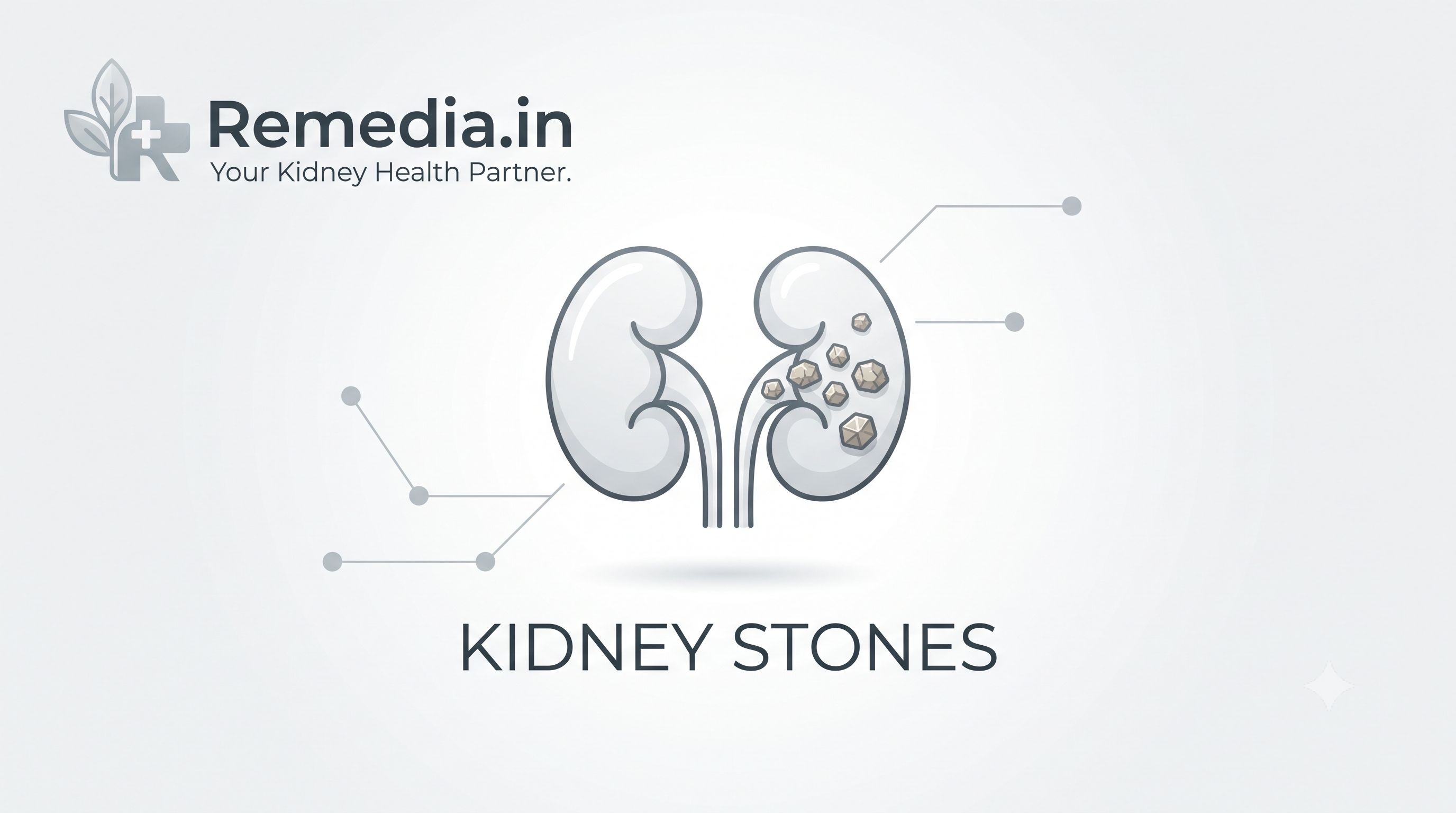
Kidney stones are hard mineral and crystalline deposits that form inside the kidneys or urinary tract. In the medical field, these stones are referred to as renal calculi, and the condition itself is known as nephrolithiasis or urolithiasis.
Common Symptoms
Pain in the abdomen, flank (the side of the body), or groin.
Blood in the urine.
The pain caused by kidney stones is known as renal colic. It typically comes in intense, sharp waves rather than a steady ache, and is often accompanied by nausea, vomiting, or a burning sensation during urination.
Causes & Risk Factors
Kidney stones develop when urine becomes too concentrated (a decrease in urine volume) or when there is an excess of stone-forming substances in the urine.
Key Risk Factors Include:
Dehydration: Concentrated urine resulting from reduced fluid intake.
Strenuous Exercise: Sweating heavily without adequate fluid replacement.
Genetics: Having a family history of kidney stones.
Types of Kidney Stones
Stones are categorized by the chemical compounds they are made of:
Calcium Stones: The most common type, formed by calcium combining with either oxalate or phosphate.
Uric Acid Stones.
Cystine Stones: Formed from the amino acid cystine.
Struvite stones are another major type of kidney stone. Unlike the others, they typically form in response to a urinary tract infection (UTI) and can grow very quickly with few warning signs.
Diet & Prevention Guidelines
Hydration: Drink plenty of water throughout the day to keep urine diluted.
Calcium Warning: Avoid taking calcium in pill/supplement form, as this can increase your risk of developing stones.
While calcium pills should be avoided, eating calcium-rich foods (like dairy) is actually highly recommended. Dietary calcium binds to oxalates in your digestive tract, preventing them from reaching your kidneys and forming stones.
Foods to Avoid: To prevent calcium-oxalate stones, avoid or limit the following foods:
Spinach and beets
Wheat germ and soybeans
Crackers and peanuts
Okra and sweet potatoes
Chocolate and black Indian tea
Grapes, green peppers, raspberries, and strawberries
Suggested Medicines
The original text suggests the following homeopathic remedies:
China Officinalis 30: Take 1 drop in a cup of water, once a week.
Sabal Serrulata-Q: Take 10 drops in a cup of water, both night and morning.
Disclaimer: This page contains basic information. If you are concerned about your health, you should consult a doctor.
Don't self-treat a serious condition
Conditions like this deserve a doctor's eye. Start an online consultation and get a treatment plan suited to you.
Start Consultation