Breathe Easy: A Homeopathic Practitioner’s Complete Guide to Healing Asthma Naturally
Discover natural and effective homeopathic treatments for asthma. A practitioner explains specific remedies for weather-triggered, gastric, and nervous asthma, plus expert tips for acute respiratory relief.
Don't self-treat a serious condition
Conditions like this deserve a doctor's eye. Start an online consultation and get a treatment plan suited to you.
Start Consultation1. Understanding Asthma (Breathlessness)
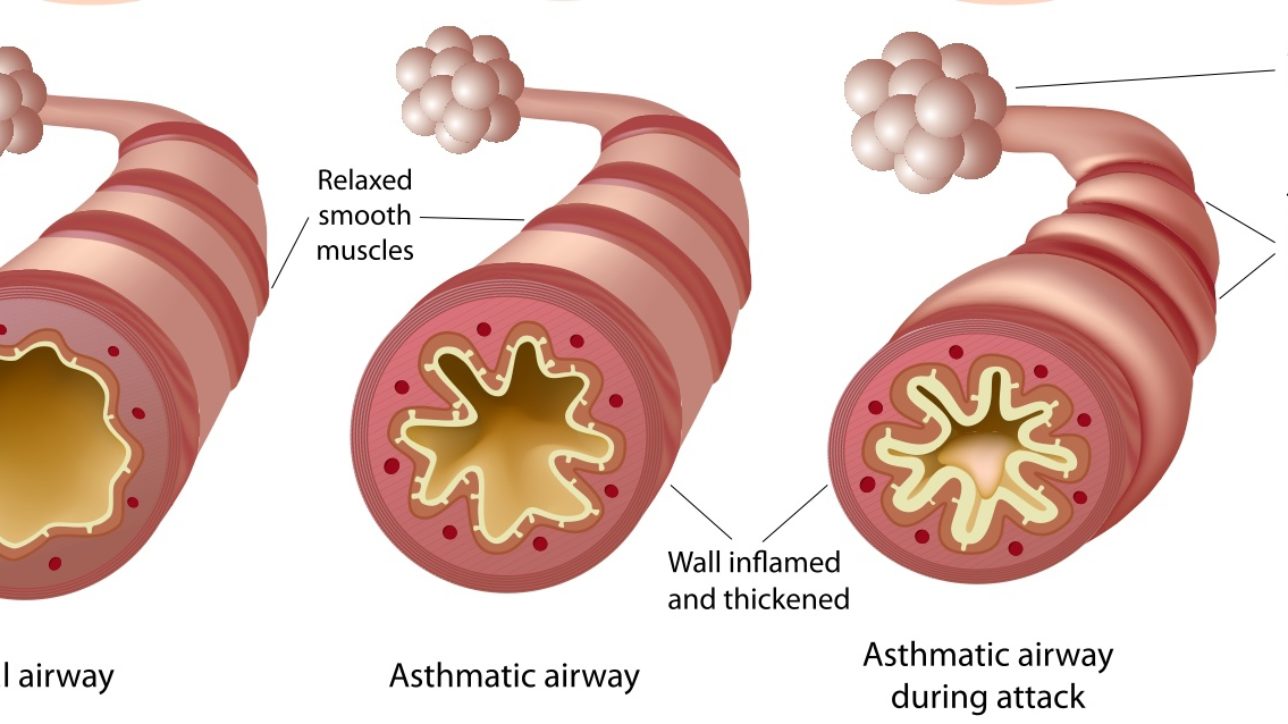
Asthma is an allergic disorder primarily characterized by severe breathlessness. It is the result of a spasmodic narrowing of the respiratory passages. During an asthma episode, the patient experiences paroxysmal (sudden and severe) attacks of dyspnoea (labored breathing).
The Mechanics of Breathing in Asthma:
Inspiration (drawing air into the lungs) becomes very short.
Expiration (breathing air out) becomes heavily prolonged and difficult.
The Root Cause: This distress is caused by the narrowing of the trachea, bronchi, and bronchioles, which is especially marked during expiration.
👉 This narrowing is often accompanied by excessive mucus production and severe inflammation of the bronchial lining, which further traps air in the lungs and causes a wheezing sound.
Who gets it and how long does it last? Asthma can occur at any age. There is frequently a strong family history of allergies, which may manifest as urticaria (hives), hay fever, migraine, or asthma itself. An asthma attack is unpredictable and may last for minutes, hours, or even days.
👉 Asthma is classified by the World Health Organization as a major non-communicable disease. Common environmental triggers include pollen, dust mites, mold spores, pet dander, and cold air, while internal triggers can include emotional stress.
Fortunately, Homoeopathy may do great good to suffering humanity in treating this very painful and troubling disease by addressing the root constitutional susceptibility.
2. Delivery Methods: The Nebulizer
A Nebulizer is a medical device used to deliver liquid medication directly into the lungs in the form of a fine mist. The patient simply inhales the medication while breathing normally through a connected mouthpiece or face mask.
👉 A nebulizer typically turns liquid medicine into a mist using compressed air or ultrasonic power. It is crucial to clean nebulizer parts thoroughly after each use to prevent bacterial growth that could trigger further lung infections.
3. Emergency & Maintenance Liquid Mixtures
During an acute attack, the following specially formulated mixture can be prepared to help subside the symptoms.
👉 In Homeopathic pharmacology, the 'Q' symbol next to a remedy denotes a Mother Tincture. This is the concentrated liquid botanical extract from which higher dilutions are made.
The Acute Relief Mixture: Take 100ml of well-boiled water (allow it to cool so it is lukewarm, strictly at body temperature) and put the exact number of drops of the following Mother Tinctures into the water:
Ipecacuanha-Q: 1 drop
Aconitum Napellus-Q: 5 drops
Crataegus Oxyacantha-Q: 100 drops
Aralia Racemosa-Q: 5 drops
Quebracho (Aspidosperma)-Q: 5 drops
Sabal Serrulata-Q: 20 drops
Dosage: Mix it well. Give the patient approximately 5ml of this mixture every 15 minutes until the attack subsides.
Routine Maintenance Remedies: To build immunity and prevent recurrent attacks, the following routine is advised alongside the emergency mixture:
Sepia 30: Give 1 drop in ½ cup of water, once a week.
Antimonium Crudum 30: Give 1 drop in ½ cup of water, twice daily after meals.
4. Homeopathic Materia Medica for Asthma
In homeopathy, we do not just treat the disease name; we treat the unique symptoms of the individual. Check if the majority of the symptoms of any of the following medicines match your specific condition.
Respiratory & Weather-Aggravated Asthma
Antimonium Tart 30:
Triggered by cold, humid weather.
Attacks often hit at 3 a.m., compelling the patient to sit up and seek open air.
There is a loud, rattling sound from the chest while coughing, but no mucous comes out.
The face turns pale and blue and is covered with cold sweat.
Key symptom: An irresistible desire to sleep, even during intense respiratory distress.
Ammoniac Gummi:
Best for humid asthma.
Accompanied by tenacious (sticky) expectoration and a distinct sensation as if something would be torn loose inside the chest.
Natrum Sulphuricum:
Shortness of breath is notably worse upon a change to damp weather (moist asthma).
A great deal of rattling in the chest.
Often accompanied by a looseness of bowels at each attack, and symptoms are worse from drinking alcohol.
Indicated by a Sycotic taint. 👉 The 'Sycotic taint' refers to one of Hahnemann's primary chronic miasms, indicating an underlying genetic or acquired disposition characterized by overgrowth, mucous membrane issues, and severe aggravation in wet weather.
Gastric & Digestive Asthma
Nux Vomica 30:
Attacks brought on by gastric disturbance or a digestive upset (fulness and oppression worse after a hearty meal).
Prolonged breathlessness from midnight until morning.
Shallow, oppressive breathing with a dry cough.
Accompanied by a bursting headache, gripping pain in the stomach, and a frequent, ineffectual desire for stool.
The patient must loosen clothing and is relieved by belching.
Carbo Veg 30:
Attacks after eating salted meat or fish, or reflex asthma from an accumulation of gas in the stomach.
Breathlessness and spasmodic cough causing gagging and vomiting.
Copious cold sweat on the face and body.
Key symptom: The person strongly desires to be fanned from a close distance. Can prove to be life-saving when a person seems to be collapsing or sinking from severe breathlessness.
Zingiber:
Specific for asthma of a gastric origin.
Unlike other remedies, with Zingiber, there is absolutely no anxiety present during the attack.
Ipecacuanha (Ipecac) 30:
Attacks especially in winter, preceded by severe nausea and vomiting.
Violent constriction in the throat and chest, sudden wheezing dyspnoea (threatening suffocation), and dry cough.
There is weight and anxiety about the chest.
Aggravated by motion; the cough causes gagging and vomiting.
Key symptom: Persistent nausea (which is not relieved even after vomiting) and complete thirstlessness.
Anxious, Nervous, & Suffocative Asthma
Arsenicum Album (Arsenic) 30:
Precipitated after consuming cold drinks or foods.
Breathlessness worse from 12 a.m. to 2 a.m. (attacks of suffocation especially at night or when lying down).
Unable to lie down for fear of suffocation—must sit and bend forward.
Darting pain and burning through the upper third of the right lung.
Accompanied by great anguish, restlessness, inexplicable prostration (weakness), and a profound fear of death. Especially useful if the disease is chronic and the dyspnoea habitual.
Stramonium:
Indicated for nervous asthma.
The patient's voice suddenly gives out and takes on a much higher pitch.
Great sense of suffocation with a tight feeling across the chest, and the face turns blue.
Apis Mellifica:
The patient feels complete despair; he does not see how he can possibly get another breath.
Bromine:
The patient feels as if he could not get enough air into his lungs, and consequently tries to breathe very deeply. This sensation is owing to a constriction of the glottis (the part of the larynx consisting of the vocal cords).
Unique Triggers & Specific Sensations
Lobelia Inflata:
A weak sensation starts in the epigastrium (upper abdomen) and extends up into the chest.
Accompanied by nausea, profuse salivation, and a sensation of a lump in the stomach.
Great oppression of the chest, which is uniquely relieved by moving about.
Attacks are often preceded by a prickly sensation running through the whole system.
Kalium Bichromicum:
Symptoms are specifically worse at 3 or 4 o'clock in the morning.
Relief comes from raising stringy mucus, as well as from sitting up and bending forward.
Grindelia:
Key symptom: On falling asleep, the patient ceases to breathe and wakes up with a sudden start.
Highly beneficial for humid asthma and acute catarrhal asthma.
Pothos:
Asthma that is brought on or made significantly worse specifically from the inhalation of dust of any kind.
👉 While homeopathic remedies offer powerful constitutional and acute support without harsh side effects, Status Asthmaticus—an asthma attack that does not respond to standard treatments—is a strict medical emergency. Always ensure professional medical assessment is available if symptoms do not rapidly improve.
Don't self-treat a serious condition
Conditions like this deserve a doctor's eye. Start an online consultation and get a treatment plan suited to you.
Start Consultation