Understanding Filariasis (Elephantiasis): Causes, Detection, and Holistic Management
Discover the causes and symptoms of Filariasis (Elephantiasis). Explore effective homeopathic remedies and lifestyle tips for holistic management and relief.
Don't self-treat a serious condition
Conditions like this deserve a doctor's eye. Start an online consultation and get a treatment plan suited to you.
Start ConsultationFilariasis, commonly known in its advanced stages as Elephantiasis, is a deeply distressing chronic condition found primarily in tropical and subtropical climates. It is a parasitic disease caused by various nematode worms that invade and parasitize the tissues of human beings. The microscopic embryos of these worms, known as microfilariae, circulate within the human bloodstream.
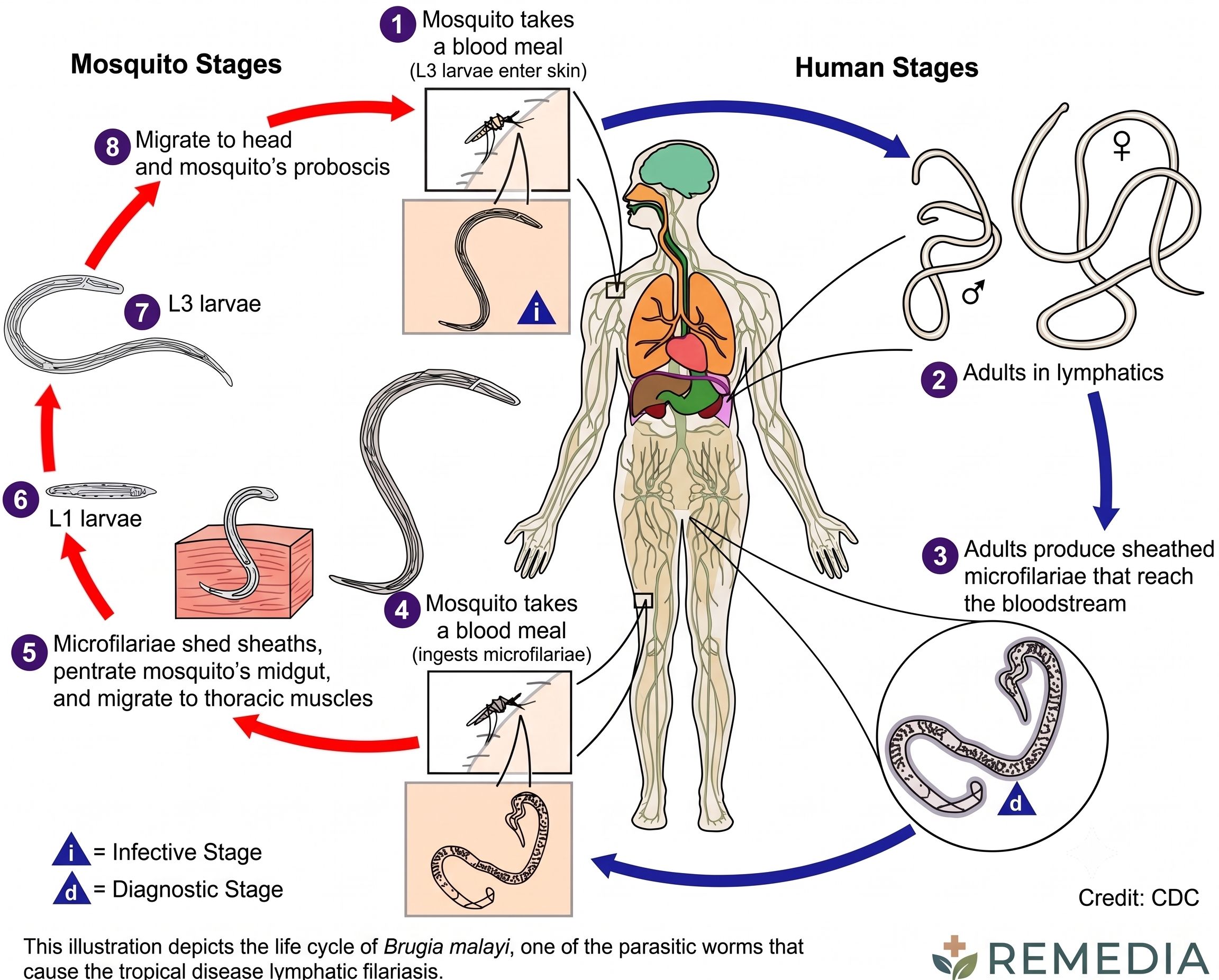
While the presence of the worms is the biological root of the disease, the infection is entirely vector-borne; it is transmitted from person to person through the repeated bites of infected mosquitoes, primarily belonging to the Culex, Anopheles, and Aedes species.
Once inside the human body, the disease takes a profound toll on the body's natural drainage network. The adult nematode worms specifically lodge themselves in the human lymphatic system, a vital part of the immune system responsible for balancing bodily fluids. Over time, the worms multiply and physically block the lymphatic vessels. This severe obstruction prevents lymph fluid from draining properly, leading to the massive, debilitating tissue swelling (lymphedema) that characterizes Elephantiasis.
The Culprits: Varieties of Nematode Worms
There are several distinct varieties of these parasitic worms responsible for the disease globally, including:
Wuchereria bancrofti
Brugia malayi
Loa loa
Tetrapetalonema perstans
Onchocerca volvulus
In the context of India, the prevalent strains causing public health concerns are Wuchereria bancrofti and Brugia malayi. However, Wuchereria bancrofti is by far the most dominant, contributing mainly to the widespread Filariasis problem across the country.
Disease Progression and Symptoms
Filariasis is not a disease that appears overnight; it develops in distinct stages. In the acute (early) phase of the infection, a patient may experience sudden and recurrent bouts of high fever, severe chills, body aches, and acutely inflamed, painful lymph nodes (lymphadenitis).
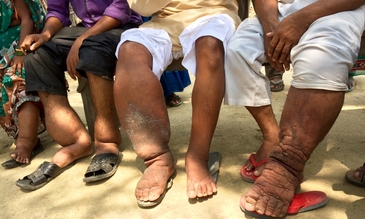
If the acute phase is left untreated and the lymphatic system becomes chronically blocked, the disease progresses to its most recognizable and devastating stage. This chronic phase is marked by permanent, often irreversible swelling, which most commonly affects the lower extremities (legs), arms, breasts, or male genital organs (scrotum). Beyond the physical burden, this extreme disfigurement often leads to significant psychological distress and social stigma for the patient.
Detection and Diagnosis
One of the most fascinating and challenging aspects of Filariasis is the behavior of the microfilariae (mf). These embryos exhibit a phenomenon known as "nocturnal periodicity." This means that the microfilariae migrate to the peripheral blood vessels (near the surface of the skin) only during the night.
Because of this unique biological rhythm, daytime blood tests are often ineffective. To accurately detect microfilariae carriers, night blood surveys are absolutely essential. Blood samples must be meticulously collected between 8:00 PM and midnight, perfectly timing the peak concentration of the embryos in the bloodstream.
A Homeopathic Approach to Treatment
Homeopathy offers a deeply supportive, systemic approach to managing Filariasis. Rather than merely suppressing symptoms, the goal is to stimulate the body's vital force, reduce lymphatic inflammation, and manage the painful tissue changes.
Homeopathy operates heavily on the principle of individualization. While the specific remedies outlined below are foundational for the general physical presentation of Elephantiasis, a complete homeopathic assessment will always factor in the patient's unique physical constitution, emotional state, and specific symptom modalities for long-term management.
For the clinical treatment of Filariasis, the following protocol is highly recommended:
Myristica Sebifera (Q, 3, 6, 30): This is considered the principal and most prominent remedy in the treatment of Elephantiasis. It acts powerfully on cellular tissue and has a strong antiseptic nature, helping to combat the deep-seated infection and inflammation.
Elaeis Guineensis (Q): This remedy is specifically indicated and highly effective when the patient's skin has become visibly thickened, severely hardened, and is accompanied by intense, persistent itching.
Silicea 3x: Administered as 4 tablets, taken thrice daily. Silicea helps in addressing chronic inflammatory conditions, improving the integrity of the connective tissues, and clearing out cellular debris.
Hydrocotyle Asiatica (Q): Administered as 2 drops in a cup of water, taken twice daily. This remedy is renowned for its action on severe skin conditions, helping to reduce the thickening and hypertrophic changes in the epidermal layers.
Lifestyle and Dietary Guidance
Healing from Filariasis requires a holistic lifestyle approach to support the homeopathic remedies:
Dietary Adjustments: Consume plenty of fresh fruits and green vegetables regularly to provide the body with essential antioxidants and vitamins needed for tissue repair.
Foods to Avoid: Strictly avoid spicy and heavy, fried articles, as these can increase systemic inflammation and tax the body's digestive and filtering organs.
Movement: Light, gentle exercise is highly beneficial. Unlike heavy strain, light movement actively acts as a mechanical pump for the lymphatic system, gently encouraging the stagnant fluid to move and drain from the swollen limbs.
Skin Hygiene: Meticulous hygiene of the swollen limbs is critical. The deeply folded, thickened skin is highly prone to secondary bacterial and fungal infections. Daily washing with mild soap and careful drying can prevent these secondary infections, which would otherwise severely worsen the swelling and pain.
Don't self-treat a serious condition
Conditions like this deserve a doctor's eye. Start an online consultation and get a treatment plan suited to you.
Start Consultation