Glaucoma: The Silent Thief of Sight – Causes, Symptoms & Homeopathic Relief
Glaucoma often develops with zero early warning signs, silently stealing your vision. Learn about the causes of high eye pressure, how to spot early symptoms, and which homeopathic remedies can help support your eye health and manage this critical condition.
New to homeopathy? Start here →
Don't self-treat a serious condition
Conditions like this deserve a doctor's eye. Start an online consultation and get a treatment plan suited to you.
Start ConsultationGlaucoma is fundamentally categorized as a type of optic neuropathy. It is a complex and often misunderstood condition that affects the delicate structures of the eye. In the medical and holistic communities alike, glaucoma has been ominously nicknamed the "sneak thief of sight." This moniker is incredibly accurate because the loss of vision normally occurs so gradually, over such an extended period of time, that it is often only recognized when the disease has reached a quite advanced stage.
The optic nerve, located at the back of the eye, acts as the vital communication cable that carries visual information from the retina to the brain, enabling us to see. Glaucoma occurs when this specific nerve becomes damaged. Untreated, this condition leads to permanent destruction of the optic nerve fibers, resulting in visual field loss, which can ultimately progress to total blindness. Routine eye tests are the primary and most effective way to pick up early signs of glaucoma.
THE ROLE OF INTRAOCULAR PRESSURE (IOP)
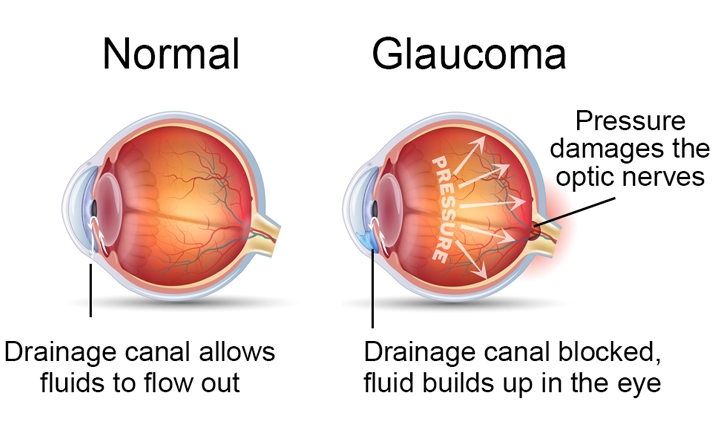
The human eye is filled with fluid that must be maintained at a specific pressure to keep the eye's shape and function. Increased intraocular pressure (IOP) resulting either from a malformation or malfunction of the eye’s drainage structures causes Glaucoma.
Raised intraocular pressure (above 22mmHg) is a significant risk factor for developing this condition.
When fluid in the eye cannot drain properly through its natural channels, pressure builds up. This elevated pressure physically compresses and damages the delicate optic and retinal fibers.
However, the relationship between pressure and damage is highly individual. One person may develop nerve damage at a relatively low pressure, while another person may have high eye pressure for years and yet never develop damage.
If left untreated, an elevated IOP causes irreversible damage, but early detection and holistic or medical treatment can slow, or even completely halt, the progression of the disease.
CRITICAL FACTS ABOUT GLAUCOMA
Understanding the absolute truths about this condition is the first step in preserving your vision.
GLAUCOMA IS A LEADING CAUSE OF BLINDNESS: Glaucoma can and will cause blindness if it is left untreated. Unfortunately, the reality of the disease is that approximately 10% of people with glaucoma who receive proper treatment still experience loss of vision.
THERE IS NO CURE (YET) FOR GLAUCOMA: Currently, glaucoma is not curable, and any vision that has been lost cannot be regained. However, with appropriate medication, surgical intervention, and supportive holistic care, it is possible to halt further loss of vision. Because it is a chronic condition, it must be monitored for life. Diagnosis is always the very first step to preserving your vision.
EVERYONE IS AT RISK: No demographic is entirely safe. Everyone is at risk for glaucoma, from newborn babies to senior citizens. While older people are at a significantly higher risk, babies can be born with congenital forms of the disease, and young adults can frequently develop it as well.
THERE MAY BE ABSOLUTELY NO SYMPTOMS TO WARN YOU: In the case of open-angle glaucoma—which is the most common form—there are virtually no early symptoms. Usually, there is absolutely no pain associated with the increased eye pressure. Vision loss subtly begins with the peripheral (side) vision. You may unconsciously compensate for this blind spot by turning your head to the side, meaning you may not notice anything is wrong until a significant amount of vision is permanently lost. The best way to protect your sight is to get tested regularly so treatment can begin immediately.
THE FOUR PRIMARY TYPES OF GLAUCOMA
Glaucoma is not a single disease, but rather the name given to a group of conditions that affect the eye's drainage system. In each case, it is the optic nerve behind the eye that sustains the damage. This damage can occasionally be caused by an inherently weak nerve, but more usually, it is triggered by the build-up of fluid in the eye.
CHRONIC GLAUCOMA: This is the most common form of the condition. The drainage channels from the eye become slowly blocked over a long period of time. Because the pressure builds incredibly slowly, there is no pain, and the vision gradually becomes impaired without the patient noticing.
ACUTE GLAUCOMA: Unlike the chronic form, acute glaucoma can occur very suddenly and can be highly painful. The drainage completely blocks, causing a rapid spike in pressure. If left untreated, it can quickly lead to blindness.
DEVELOPMENTAL GLAUCOMA: This form mostly affects babies and young children. It is relatively rare but potentially very serious, and it is primarily caused by a congenital malformation of the eye structures.
SECONDARY GLAUCOMA: This occurs when another underlying problem in the eye—such as inflammation, trauma, or a tumor—causes fluid to build up, resulting in elevated pressure and deteriorating eyesight.
HOW COMMON IS GLAUCOMA AND WHO IS AT RISK?
The statistics surrounding glaucoma highlight the importance of preventative screening:
By the age of 40, about 1 person in every 100 has some form of glaucoma.
The incidence rises steadily as people age. By the age of 70, about 1 person in every 10 has some form of glaucoma.
People of African origin are significantly more likely to develop the condition.
Additional high-risk groups include people who are highly short-sighted, those suffering from diabetes, and individuals with a direct family history of the disease.
RECOGNIZING THE SYMPTOMS
Because the symptoms vary wildly depending on the type of glaucoma, one must remain vigilant.
Acute Glaucoma Symptoms: This can be excruciatingly painful. The sudden increase in pressure can make the eye appear very red. Eyesight can drastically deteriorate and the patient may even experience a complete visual blackout. Systemic symptoms such as nausea and vomiting often accompany the eye pain.
Chronic Glaucoma Symptoms: This is vastly less easily spotted. There is no pain, and the deterioration in eyesight may be incredibly subtle. Often, people only go for an eye test after casually noticing that their sight is less good in one eye than the other. The terrifying fact that this type of glaucoma can creep up on people unnoticed is the primary reason why doctors strongly advise regular eye examinations.
CONVENTIONAL TREATMENTS
Glaucoma is conventionally treated by attempting to reduce the physical pressure on the eyes.
Eye drops are typically the common first approach to decrease fluid production or increase drainage.
If topical medications fail to unblock the drainage channels, an operation may be required.
Surgical interventions usually take the form of laser surgery or a trabeculectomy—a highly specialized operation designed to create a new channel to improve the drainage of fluids from the eyes.
While the damage that has already been caused by the glaucoma cannot be reversed, early diagnosis and prompt treatment can effectively prevent further deterioration.
HOMEOPATHIC APPROACH TO GLAUCOMA
In homeopathic practice, we look at the individual's specific presentation of symptoms—the exact nature of the pain, the visual disturbances, and the underlying constitutional health. While homeopathy does not claim to "cure" irreversible optic nerve damage, specific remedies are highly serviceable in managing symptoms, supporting intraocular fluid dynamics, relieving associated neuralgias, and potentially slowing progression when used alongside proper monitoring.
Preventative and Supportive Protocol
To support overall eye health and assist in prevention, the following baseline remedies are often utilized:
Zincum Sulphuricum 1M: Take 1 single drop in a cup of water, administered once every fortnight.
Euphrasia-Q (Mother Tincture): Take 5 drops in a cup of water, administered twice daily.
Symptom-Specific Homeopathic Therapeutics
Below is a detailed materia medica of homeopathic remedies specifically indicated for various presentations of glaucoma and its accompanying symptoms:
Areca catechu: Generally serviceable in cases of glaucoma to support overall eye function.
Belladonna: Highly indicated for the severe, throbbing pains that accompany acute attacks of glaucoma.
Bryonia alba: Used when the eyeball feels full, as if it is being pressed out of the head. It is accompanied by sharp, shooting pains in the eye and head, which are notably aggravated at night.
Cedron: The premier remedy for severe ciliary neuralgia (eye nerve pain) that is distinctly periodical (occurring at exact times of the day). Also used in glaucoma complicated by iritis or choroiditis.
Cocainum hydrochloricum: Indicated when there is increased intraocular tension alongside decreased corneal sensibility (numbness of the eye surface).
Cocculus indicus: Suited for rheumatic glaucoma marked by venous hyperaemia (blood congestion). Symptoms include dilated pupils, insensibility to light, haziness of the lens and vitreous, and severe pain in and around the eyes. The patient may present with pupils that are irregular and contracted, blue borders around the cornea, photophobia (light sensitivity) with no lachrymation (no tearing), and tearing pains in the brow and left side of the head.
Colchicum autumnale: Indicated when glaucoma is present alongside soft cataracts.
Colocynthis: Best for the violent, spasmodic pains in the eyeballs which often precede the actual development of glaucoma. It offers immense relief for the pains attending iritis and glaucoma, specifically when the pain is relieved by applied heat and firm pressure.
Comocladia dentata: Used when there is a profound sense of fullness, and the eyeball physically feels entirely too large for the socket.
Crocus sativus: Helpful in cases of threatened glaucoma and conditions involving embolism of the central retinal artery.
Crotalus horridus: Indicated when glaucoma is accompanied by diplopia (double vision).
Eserinum: Through its powerful mechanism of contracting the pupil, it is of immense service in treating adhesions of the iris. It actively reduces redness and intraocular tension in conjunctival inflammation (especially where a perforating ulcer is threatened), as well as in general glaucoma and asthenopia (eye strain).
Gelsemium sempervirens: Used for complex ocular issues including detached retina, glaucoma, and descemetitis (inflammation of the Descemet's membrane of the cornea).
Gridelia robusta: A supportive remedy for general glaucoma.
Jaborandi: Its highly beneficial effects have been clinically observed in simple glaucoma, iridocyclitis, plastic, traumatic, and rheumatic iritis, as well as optic neuritis, retinal haemorrhages, and detachment of the retina.
Kalium iodatum: Specifically indicated for incipient glaucoma in syphilitic subjects. The physical signs include a dull, discolored state of the iris, burning sensations in the eyes, excessive tearing (lachrymation), dilated pupils, and amaurotic (partial or total blindness) symptoms.
Lac caninum: A highly specific visual disturbance points to this remedy: when looking in a mirror by gaslight, after exerting the eyes, the patient sees a green spot or a green band before her left eye. This band typically appears to be slanting downward from the left eye to the right cheek.
Magnesium phosphoricum: Indicated for generalized nerve pain and spasm associated with glaucoma.
Natrum muriaticum: A deep-acting constitutional remedy for general glaucoma.
Osmium metallicum: Capable of addressing true glaucoma. It is indicated for violent pains and lachrymation, with profound aches above and below the eyes. Visually, a candlelight will appear surrounded by a rainbow circle where green colors predominate. The patient experiences iridescent vision and such intense weakness of sight that they cannot tell night from day.
Phosphorus: Known to have successfully arrested both cataracts and glaucoma, and cured retinitis albuminuria resulting from suppressed menses. The physical symptom is that the eyes feel incredibly sore to the touch and feel full.
Physostigma venenosum: Used with signal success to rapidly diminish intraocular tension, especially when the glaucoma has developed as the direct result of a physical injury to the eye.
Piperazinum: A supportive remedy for glaucoma.
Plumbum metallicum: Specifically indicated for cases of glaucoma that are secondary to a spinal lesion or neurological deficit.
Prunus spinosa: Highly effective for severe, crushing pain in the eye, feeling as if the eye is being pressed asunder or burst outward. It features sharp, shooting pains through the eye and corresponding side of the head. It addresses ciliary neuralgia, choroido-retinitis, irido-choroiditis, and irido-cyclitis. The eye examination may show the aqueous and vitreous humors are hazy, and the fundus is hyperaemic (congested with blood).
Saponaria officinalis: Similar to Plumbum, indicated for glaucoma, especially if secondary to a spinal lesion.
Spigelia anthelmia: A premier remedy for violent left-sided eye complaints. It cures the neuralgias, severe inflammation, and amaurotic conditions associated with glaucoma when the specific symptom picture of Spigelia is present.
Sulphur: Indicated when the patient experiences a sensation of a veil before the eyes, resulting in dim vision for both near and distant objects. Another key symptom is that gas or lamp light appears to be surrounded with a distinct halo.
Wiesbaden aqua: Indicated for general glaucoma support.
Through diligent testing, early detection, and a balanced approach utilizing both conventional monitoring and tailored homeopathic support, the progression of glaucoma can be carefully managed, protecting the priceless gift of sight.
Don't self-treat a serious condition
Conditions like this deserve a doctor's eye. Start an online consultation and get a treatment plan suited to you.
Start Consultation
Medically reviewed by
Dr. Gupta · B.Sc. GHMS
Senior Homoeopath with 40+ years of field experience
View full profile →